The most common custom dice mistakes on a first order are a logo too detailed for a small face, low-contrast colors, an unchecked face map, the wrong marking method and zero spares. Get Custom Dice catches many of these in the free mockup, but knowing them before you request a quote makes your dice easier to read, roll and reuse.
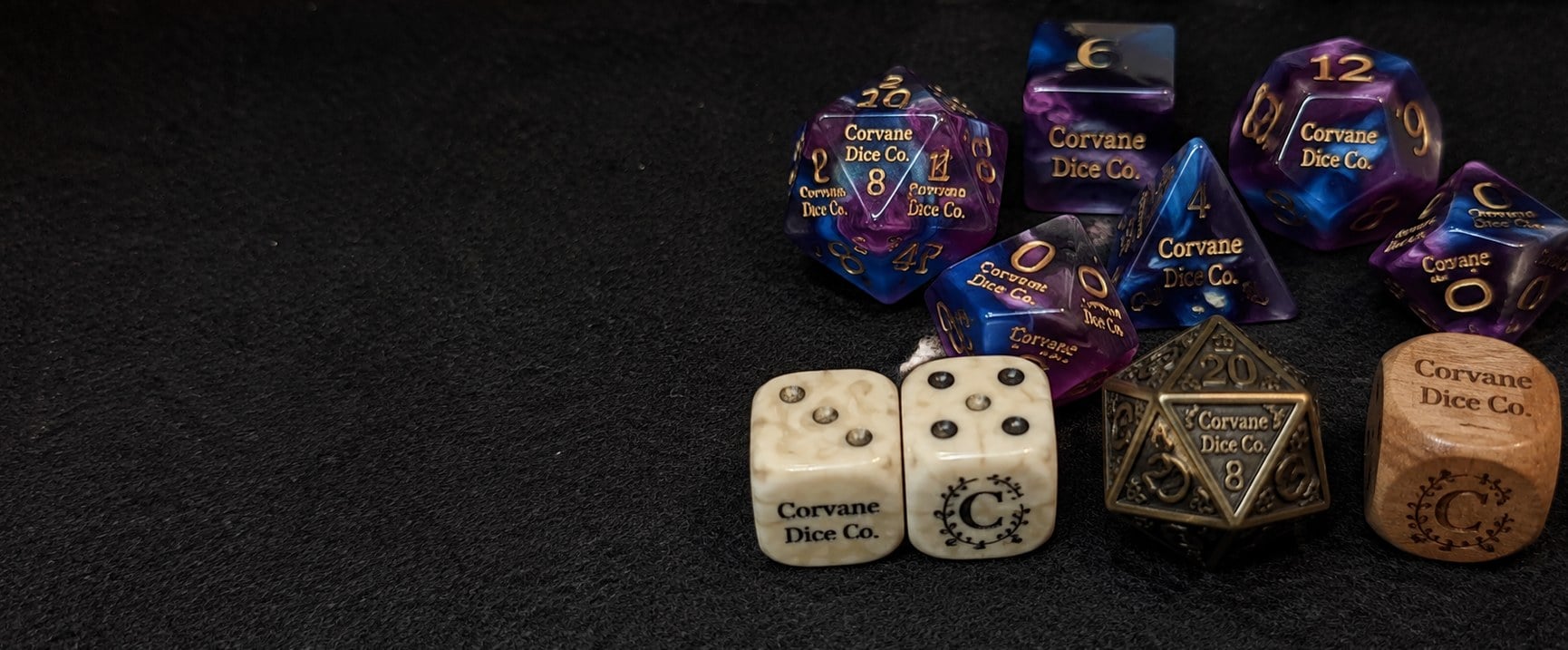
- Simplified logos read better than full wordmarks on a small die face
- High contrast between die color and marking matters more than exact shade
- Free mockup within 24 hours, with unlimited free revisions
- Minimum order is 12 dice; build in spares
- Standard turnaround is about 2 weeks after approval
What are the most common mistakes on a first custom dice order?
The most common mistakes on a first custom dice order are spec gaps, not factory errors: a logo squeezed onto a face that is too small, low-contrast colors, a face map nobody double-checked, the wrong marking method for how the dice will be used, and a quantity with no spares. Get Custom Dice catches many of these at the mockup stage, but only if you tell us how the dice will be used.
First-time buyers usually think of dice as a simple cube with a logo. In practice every face is a tiny design canvas, and dice get handled, shaken, dropped and read from across a table. A choice that looks fine on a laptop screen can be hard to read once the die is in a hand. The sections below walk through each mistake, why it happens and the simple fix.
- Treating the die like a flat print area instead of a set of small faces
- Picking dice colors and ink colors that blend together
- Approving the mockup without checking every face
- Choosing a marking method that does not suit heavy play
- Ordering exactly the headcount with no spares
- Leaving the use case out of the quote request
Why does a logo that looks great on screen fail on a custom die?
A logo fails on a custom die when it carries more detail than a small face can hold. Thin lines, small taglines, gradients and long wordmarks shrink to the point where they blur, fill in or disappear. The fix is a simplified mark: an icon, a monogram or a short word that still reads at a glance.
Most brand files are built for websites, banners and letterhead, where there is plenty of room. A standard die face is a small square, so a horizontal logo with a slogan underneath ends up tiny. Ask yourself whether someone could recognize the mark from arm’s length. If not, use the brand’s icon on its own and move the full name to the packaging or a card.
Get Custom Dice will show the logo at real proportions in the free mockup within 24 hours, so you see the problem before production rather than after. Send a vector file when you have one, and mention if a simplified version of your logo already exists.
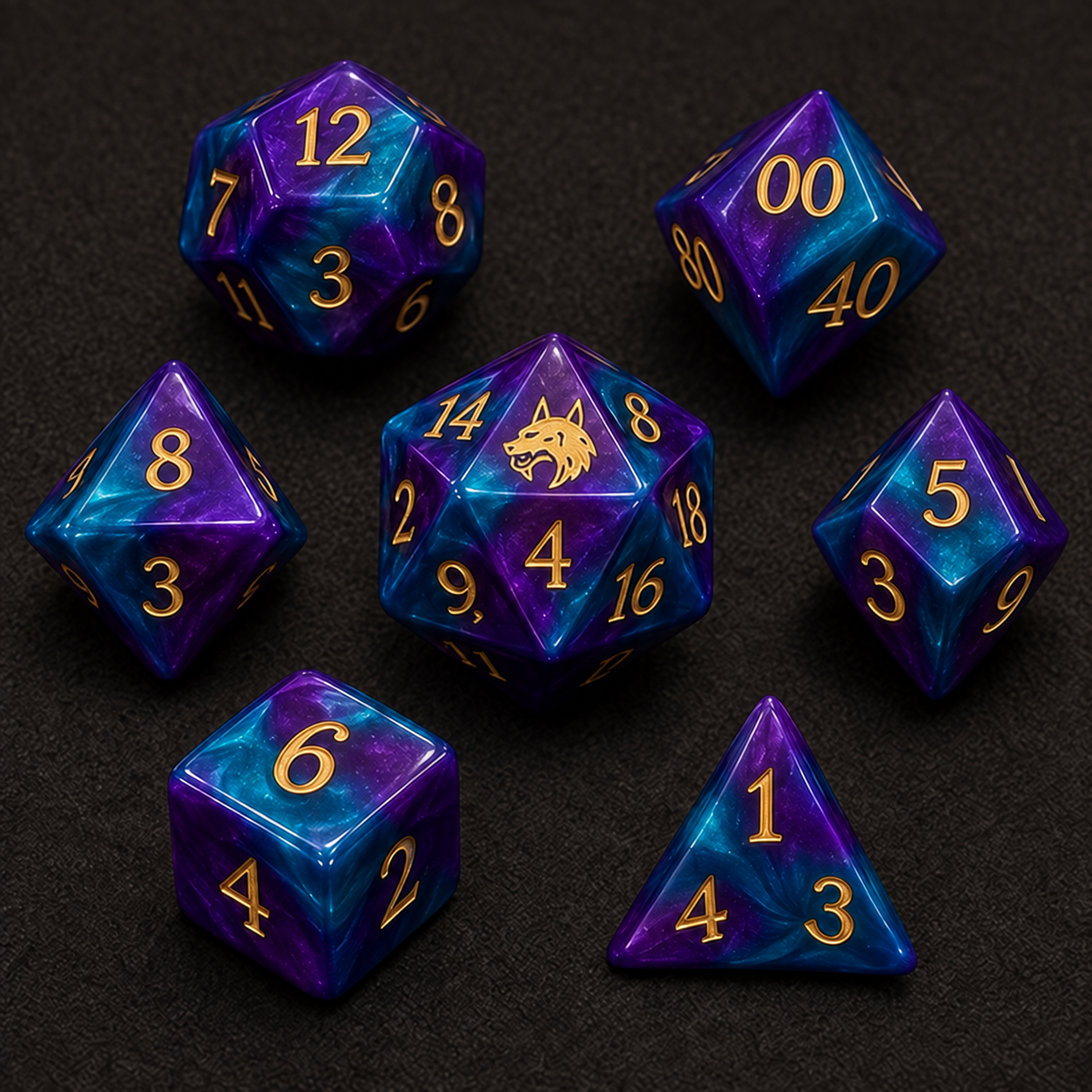
How do color choices go wrong on custom dice?
Color choices go wrong on custom dice when the die body and the marking are too close in tone. Navy ink on black dice, yellow on white and gold on cream all look elegant in a palette swatch but are hard to read on a rolled die. Pick a high-contrast pairing first, then fine-tune the brand shade.
Light and shadow also matter. Engraved or ink-filled marks sit slightly below the surface, so a shallow, dark recess on a dark die can vanish under room lighting. Printed marks sit on top of the surface and keep their color, but they still need contrast to read. Translucent and swirl-style dice add another layer: the pattern behind the mark can compete with your logo.
| Pairing | Readability | Better option |
|---|---|---|
| Dark ink on dark dice | Poor | White or metallic ink on dark dice |
| Pale ink on white dice | Poor | Black or a deep brand color on white |
| Busy swirl dice with a detailed logo | Mixed | Solid dice, or a simple icon on swirl |
| Solid dice with contrasting ink | Strong | Keep it |
What should you check on every face before approving a custom dice mockup?
Before approving a custom dice mockup, check every face, not just the logo face. Confirm the spelling, the orientation of each symbol, which number or pip count your logo replaces, and whether opposite faces still make sense for the game. A face map error is easy to approve and impossible to fix after production.
On a standard six-sided die, the logo usually replaces one face, often the one or the six. If your dice will be used in a real game, think about which value matters least to lose. For game dice with custom symbols, write the face map out as a simple list and compare it to the mockup line by line.
- Read every word letter by letter, including website addresses.
- Check that symbols point the right way and are not mirrored.
- Confirm which face carries the logo and which values remain.
- Check colors against the brand guide you sent.
- Ask a second person who has not seen the design to review it.
Revisions with Get Custom Dice are unlimited and free, so there is no reason to approve a mockup you are unsure about. You pay nothing until you approve the design.
Which marking method mistakes cost first-time buyers the most?
The costliest marking method mistake is choosing on looks alone instead of on how the dice will be used. Printed dice give full color and fine detail, engraved dice give a durable, tactile mark, and wooden or metal dice change both the feel and the finish. Match the method to the job before you match it to the brand.
Dice that will be rolled hard, every day, in a game store or a classroom, need marks that survive wear. Dice that sit on a desk as a keepsake can carry more detail and color. A giveaway at a trade show sits somewhere in between. If you are unsure, the custom printed dice and engraved wooden dice pages show the two ends of that range, and the existing guide on how dice are marked compares the methods in depth.
- Heavy play: favor engraved or ink-filled marks.
- Full-color logos: favor printed dice.
- Premium gifts: consider metal dice sets or wooden dice.
- Events and displays: consider giant and foam dice alongside standard ones.
Is it a mistake to order exactly as many custom dice as you need?
Ordering exactly as many custom dice as you need is a frequent first-order mistake. Dice roll off tables, go home in pockets and get lost in game boxes, and a late reorder means another production run. Build a small spare allowance into the first order, especially for games, prizes and gifts with a fixed recipient list.
The minimum order at Get Custom Dice is 12 dice, which suits small clubs and prototypes, but the right number depends on how the dice are used. A board game with a set number of dice per box needs replacements for damaged or missing pieces. An event giveaway needs extra for late arrivals. A polyhedral set needs a decision about whether you count by the set or by the individual die. The quantity planning guide on the blog walks through those calculations; the point here is simply that zero spares is rarely the right answer.
What details do first-time buyers forget to put in a custom dice quote request?
First-time buyers usually forget to say how the custom dice will be used. A quote request that only says “logo dice, please” leaves out the details that shape the right recommendation: the audience, the event or game, the date, and what goes on each face. Five extra lines in the request save a round of back-and-forth.
Include the following when you request a quote from Get Custom Dice:
- The dice style: standard cubes, polyhedral sets, metal, wooden, precision or giant dice
- The quantity, including spares
- Dice color and marking color preferences
- The artwork file and which face it should replace
- Any custom symbols or a full face map
- The date the dice need to be in hand, and the delivery address or addresses
- How the dice will be used: play, giveaway, gift, resale or display
With that information, the free mockup within 24 hours is much closer to final, and you spend your revision rounds on refinements instead of basics.
Do first-time buyers pick the wrong dice style for their audience?
First-time buyers often pick a dice style for themselves rather than for the people who will receive the dice. A roleplaying group wants a polyhedral set, a family game night wants a simple six-sided die, and a casino-themed event needs precision dice with sharp edges. The audience decides the style; the logo comes second.
A mismatch shows up quickly. Polyhedral sets handed to non-gamers end up in a drawer because nobody knows what the shapes are for. Plain cubes handed to a tabletop club feel like a token gesture. Before choosing, picture the person rolling the die. If you are torn between formats, the six-sided vs. polyhedral comparison lays out the trade-offs, and the polyhedral RPG dice sets and precision and casino dice pages show what each style looks like in bulk.
How do you avoid mistakes on a bulk custom dice order?
To avoid mistakes on a bulk custom dice order, approve one clear design, confirm the full quantity and color split in writing, and plan the delivery addresses before production starts. Larger runs magnify every small error, so the checklist matters more, not less, as the order grows.
Bulk orders often involve more than one decision maker, which is where mistakes creep in. Marketing approves the logo, operations sets the quantity, and someone else owns the shipping list. Give one person final sign-off on the mockup, and send the quantity, colors and addresses in one message. The bulk custom dice with your logo page covers large-run ordering in more detail.
Standard turnaround is about 2 weeks after design approval, with faster turnaround available through express shipping. If the dice are for an event, work back from the date and leave room for one or two revision rounds. Get Custom Dice will flag anything in the mockup that looks hard to read, but the final check on names, spellings and counts is always yours.
Frequently asked questions
What is the biggest design mistake people make with custom dice?
The biggest design mistake with custom dice is using a full horizontal logo with a tagline on a small face. Fine text and thin lines blur or fill in at that size. Use an icon, monogram or short word instead, and keep the full brand name for packaging. Get Custom Dice shows the logo at real proportions in the free mockup so you can judge it before production.
Should I avoid gradients and thin lines in custom dice artwork?
Custom dice artwork reads best with solid shapes, bold strokes and flat colors, so gradients and hairline details are worth simplifying. Engraved and ink-filled marks cannot reproduce soft color fades, and printed marks lose fine lines at small sizes. A cleaned-up version of your logo, built for small spaces, will look sharper on every die in the run.
Which face should my logo replace on a standard custom die?
A logo on a standard custom die usually replaces the one or the six, because those faces are easy to remember and simple to account for in play. If the dice will be used in a real game, choose the value that matters least to the rules. Note your choice in the quote request so the mockup from Get Custom Dice matches it.
Can translucent or swirl custom dice make a logo hard to read?
Translucent and swirl custom dice can make a logo harder to read because the pattern or the light passing through the die competes with the mark. A simple, bold icon in a high-contrast color usually holds up. Detailed logos are safer on solid dice. Ask Get Custom Dice to show both options in the mockup if you are unsure.
How do I spot a mirrored or upside-down symbol on a custom dice mockup?
Spotting a mirrored or upside-down symbol on a custom dice mockup is easiest when you compare each face to your original artwork side by side. Letters, arrows and asymmetrical icons are the usual culprits. Read every word aloud, check that arrows point the intended way, and ask a colleague who has not seen the design for a fresh look before you approve.
Is it risky to approve a custom dice mockup on a phone screen?
Approving a custom dice mockup on a phone screen is risky because small details, spelling and color contrast are hard to judge at that size. Open the mockup on a larger monitor, zoom in on each face and check it against your brand guide. Revisions at Get Custom Dice are unlimited and free, so there is no pressure to sign off quickly.
Do engraved custom dice need different artwork than printed dice?
Engraved custom dice usually need simpler, single-color artwork than printed dice, because engraving cuts a shape rather than laying down full color. Bold outlines and solid areas engrave cleanly, while photos and gradients do not. Printed dice can carry more color. Get Custom Dice can adapt your file for either method and will show the result in the mockup.
Why do some custom dice orders end up with too few dice?
Custom dice orders end up short when the buyer orders the exact headcount with no allowance for loss, damage or late additions. Dice are small and easy to misplace, and a reorder means a fresh production run. Adding a modest number of spares to the first order of custom dice is usually simpler than placing a second order later.
Can a vague quote request lead to the wrong custom dice?
A vague quote request can lead to custom dice that look right but suit the wrong use, such as delicate printed dice for a busy game store. Tell Get Custom Dice who will roll the dice, where and how often. That context shapes the recommended style, marking method and colors, so the first mockup is close to final.
What should I do if my team cannot agree on a custom dice design?
When a team cannot agree on a custom dice design, ask for two or three variations in the mockup and compare them side by side. Revisions are unlimited and free, so exploring options costs nothing. Name one person to give final approval, and agree in advance on the deciding factor, such as readability, brand accuracy or how the dice feel in hand.
Is it a mistake to mix too many custom dice styles in one first order?
Mixing many custom dice styles in a first order can complicate approvals, because each style needs its own mockup check, color decision and quantity. Starting with one or two styles keeps the order simple and easier to review. Once you know what your audience likes, a later order from Get Custom Dice can add metal, wooden or giant dice.
How can I check that the dice colors I chose will look right in person?
Checking custom dice colors starts with sending exact brand color references and asking how they translate to the dice material and marking method. Screens vary, so treat the mockup as a guide to placement and contrast rather than a perfect color match. Choosing a strong contrast between die and marking protects readability even if the shade shifts slightly.
Get a free mockup for your dice
Send your logo or idea and the quantity you have in mind. Get Custom Dice returns a free mockup within 24 hours, you approve the design before anything is produced, and standard turnaround is about two weeks with faster options available. Get a custom quote.